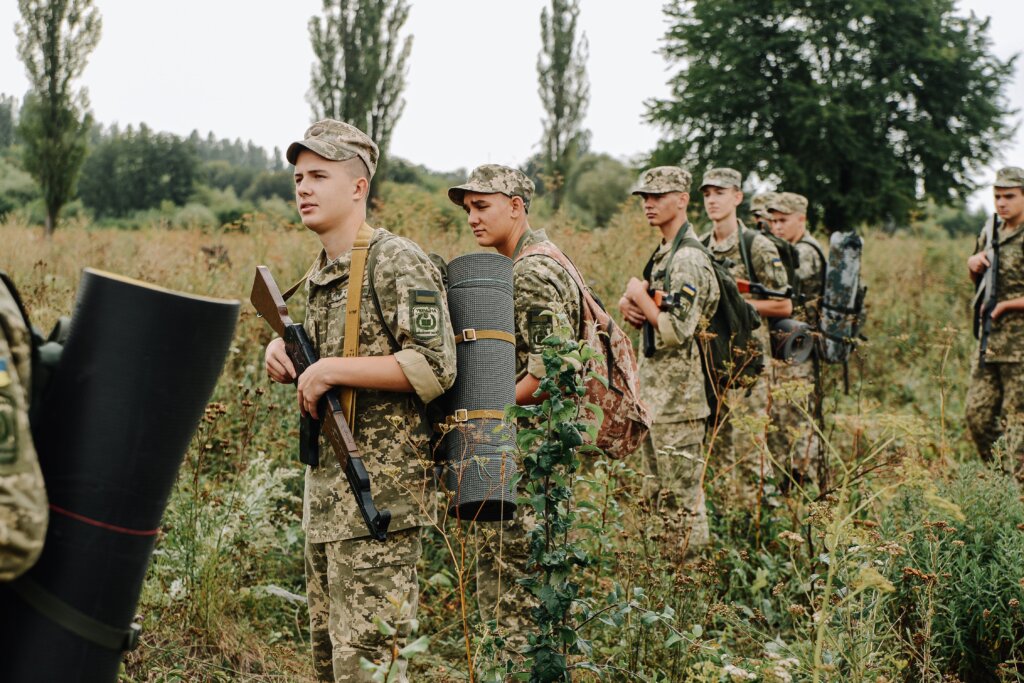
At 22, I stood at attention in a formation line, sweat running down my back, waiting for an order I already knew was coming. Forty years later, I stand in front of executives who freeze the moment someone asks them a question in English — and I recognize the exact same look on their faces that I once had on mine.
Fear doesn’t discriminate. It doesn’t care if you’re facing a drill sergeant or a boardroom full of foreign clients. The body reacts the same way: shoulders lock, breath shortens, the mind goes blank. I learned that the hard way, long before I ever became a teacher.
What the Military Actually Taught Me
People assume military training is about obedience. It isn’t — not really. It’s about repetition under pressure until the pressure stops mattering. You don’t rise to the occasion. You fall back on your training. That single idea has shaped everything I’ve built in the last four decades, first in banking, then in classrooms, and now in the Guided Voice Method.
When I left the service and moved into banking, I watched brilliant people — sharp, capable, experienced — go silent in high-stakes meetings simply because the stakes were high. Not because they lacked knowledge. Because they lacked a trained response. Nobody had ever drilled them on what to do with their fear.
That’s when it clicked: confidence isn’t a personality trait. It’s a rehearsed behavior.
From the Barracks to the Boardroom
Years later, teaching English to adults, I saw the same pattern with a different costume. A senior executive — brilliant in Portuguese, respected, decisive — would open his mouth in English and simply vanish. Not from lack of vocabulary. From the absence of a drilled response to the moment of exposure.
So I stopped teaching English the way I’d been taught to teach it. I stopped starting with grammar and started where the military had started with me: with the nervous system. Strategic repetition. Controlled exposure. Small wins stacked until the freeze response had nowhere left to live.
That became the backbone of the Guided Voice Method — not a language course, but a retraining of the moment right before the words come out.
The Real Lesson
I’m not asking anyone to march in formation. I’m asking you to notice this: whatever skill you think you’re missing — English, public speaking, a hard conversation you’ve been avoiding — the missing piece is rarely knowledge. It’s rehearsal under real conditions, done enough times that your body stops treating the moment as a threat.
I didn’t learn that in a classroom. I learned it standing in line, forty years ago, waiting for an order. It just took me half a lifetime to realize the lesson had nothing to do with the military at all.

Mr. Dantas is an English mentor, coach and behavioral strategist from Maringá, Brazil, with more than 40 years of experience across the Army, banking, education and coaching. He created the Guided Voice Method to help adults speak English with confidence under pressure.