What King David teaches us about honor, loyalty and the people who stand with us
There is a short scene in the Bible that I have read many times, but this morning it stopped me.
It is not a battle. It is not a miracle. It is not a speech in front of a crowd.
It is a cup of water poured on the ground.
When I read it, I did not think of kings or soldiers. I thought of a woman who woke up before dawn every day of my childhood. I will tell you about her later.
And the more I think about it, the more I believe that this small gesture holds one of the biggest secrets of any great achievement in life, in business, in a family or in a career: nobody gets far alone.
The scene: a king who was thirsty
The story is in 1 Chronicles 11 (and also in 2 Samuel 23).
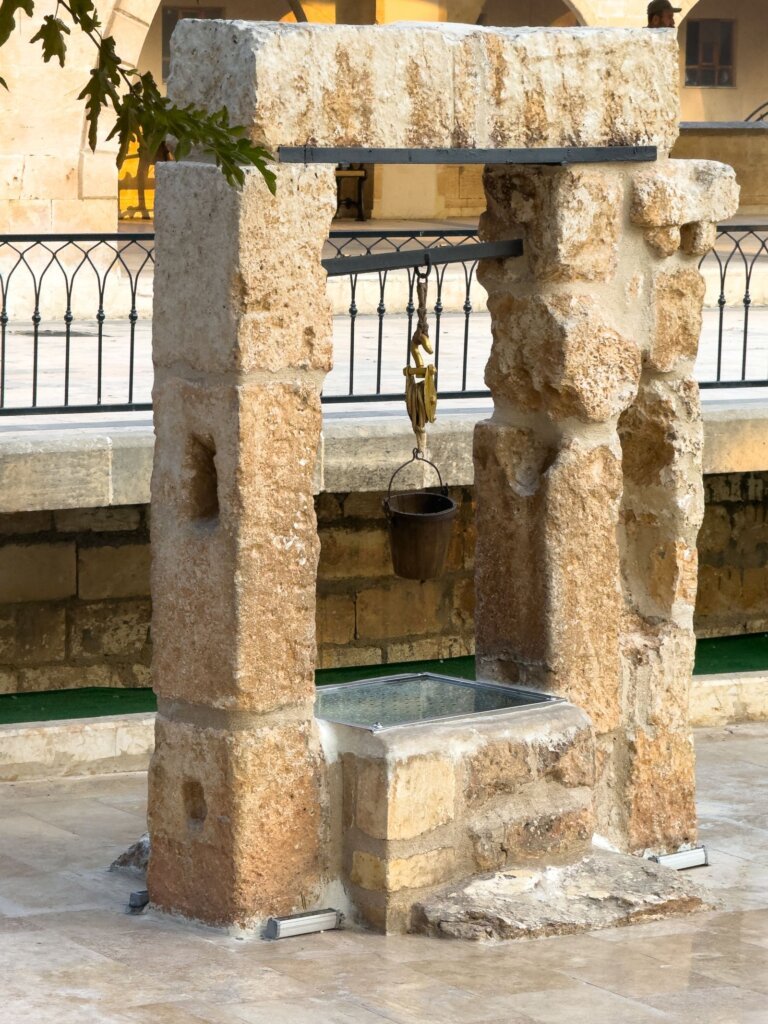
David is not yet living in a palace. He is in the cave of Adullam, a hiding place. The Philistines, his enemies, have set up a garrison in Bethlehem.
Bethlehem was not just any town. It was David’s hometown. The place where he grew up, where he looked after his father’s sheep, where he drank water as a boy.
And David was thirsty. Truly thirsty. The text says it clearly:
“And David longed, and said, Oh that one would give me drink of the water of the well of Bethlehem, that is at the gate!” (1 Chronicles 11:17, KJV)
He did not want just any water. He wanted that water. The water from the well of his town. The water of home.
Notice one detail: David did not give an order. He did not say, “Go and get it.” He expressed a desire out loud, the way any of us do when we are tired and remember something we love.
But someone was listening.
Three men broke through the enemy camp
“And the three brake through the host of the Philistines, and drew water out of the well of Bethlehem, that was by the gate, and took it, and brought it to David.” (1 Chronicles 11:18)
Think about that for a moment.
Three of David’s captains heard their leader’s wish. Nobody commanded them. Nobody promised them a reward. They simply went.
They crossed enemy lines. They walked into a town occupied by soldiers who would kill them if they were caught. They drew water from the well at the gate, the most visible place in town. And then they had to make the whole journey back, carrying the water, under the same danger.
All of that for a cup of water.
That is not obedience. That is love. That is loyalty in its purest form.
Who were these men?
1 Chronicles 11 introduces us to the group the Bible calls David’s mighty men. These were not ordinary soldiers. Among them:
- Jashobeam, the chief of the captains, who lifted his spear against three hundred men in a single battle.
- Eleazar, son of Dodo, who stood with David in a field of barley when the people fled, and held his ground until the Lord gave a great victory.
- Abishai, the brother of Joab, chief of the three, who also fought against three hundred.
- Benaiah, who went down into a pit on a snowy day and killed a lion, and who faced an Egyptian giant armed only with a staff.
And the text says something important about all of them:
“These also are the chief of the mighty men whom David had, who strengthened themselves with him in his kingdom…” (1 Chronicles 11:10)
They strengthened themselves with him. David became king, but he did not become king alone. Behind the crown there were men like these. People who stood when others ran. People who went to the well.
The gesture: he did not drink the water
Now comes the part that moves me every time.
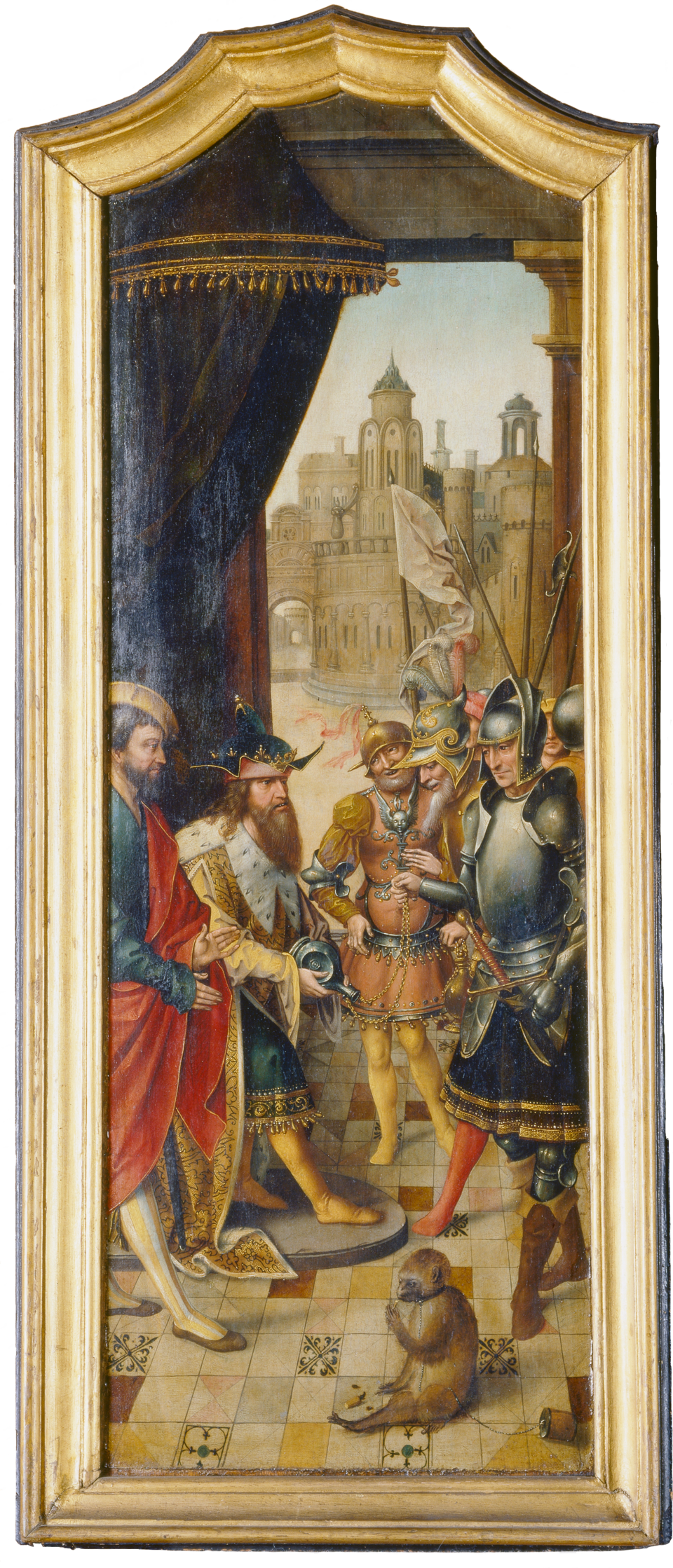
The three men return. They hand David the water he wanted so much. He is thirsty. He longed for it. It is in his hands.
And he does not drink it.
“…but David would not drink of it, but poured it out to the LORD, and said, My God forbid it me, that I should do this thing: shall I drink the blood of these men that have put their lives in jeopardy? for with the jeopardy of their lives they brought it.” (1 Chronicles 11:18-19)
Many people read this and think David was being ungrateful, or wasteful. It is the opposite.
As I read it, David did two things at the same time with one single gesture.
1. He honored God
David did not throw the water away. He poured it out to the Lord. In ancient Israel this was an offering, something given entirely to God. He took the most precious thing he had in that moment and turned it into worship.
In the Law of Moses, blood belonged to God. It was never to be consumed. And David looked at that water and saw blood. He saw the lives of his men. Something that precious, he understood, could only belong to God.
2. He honored his men
This is the part I find most beautiful. David was saying to his captains, without needing many words:
“Your lives are worth more than my thirst. What you did is too great for me to simply swallow it. I will not treat your courage as an ordinary thing.”
Imagine being one of those three men. You risked everything. And your leader looks at what you brought and says, in front of everyone, that it is sacred. That it belongs to God.
That is honor. And people never forget a leader who honors them like that.
And I believe God honored them all
The text does not state this in so many words, but this is my reflection: when a leader honors God and honors the people who sacrifice for him, the blessing does not stop with him. It flows to everyone around him.
David’s kingdom grew. His mighty men stayed with him. The group became stronger together. I see in this gesture one of the reasons why. Honor builds loyalty. Loyalty builds strength. And strength, under God, builds a kingdom.
“The Lord trieth the hearts”
This morning I was also reading Proverbs, and one verse connected with this story immediately:
“The fining pot is for silver, and the furnace for gold: but the LORD trieth the hearts.” (Proverbs 17:3)
Silver is tested in the crucible. Gold is tested in the fire. And people are tested in moments like this one.
That cup of water tested two hearts.
It tested the hearts of the three men: would they go, when no one ordered them? They went.
And it tested the heart of David: would he use their sacrifice to satisfy himself? He did not.
Every day, in smaller ways, our hearts go through the same test. When someone sacrifices for us, what do we do with it? Do we drink it as if it were nothing? Or do we recognize the price that was paid?
The well in my own story
When I read this passage, I did not think of kings or soldiers first. I thought of my mother.
I grew up on a farm, in a family of nine: my father, my mother, three sisters and four brothers, counting me. Life was simple and the work was hard. And every single day, before anyone else, my mother was already awake.
While the house was still dark, she turned on the radio, made the coffee and prepared the food so that all of us could go out to work in the fields.
Nobody asked her to. Nobody thanked her every morning. It was simply what she did. Day after day, year after year.
As a boy, I did not see it. I just woke up and the coffee was there. Only years later did I understand: my mother went to the well for us every morning. She crossed her own tiredness, her own limits, so that nine people could start the day.
That is why the story of David touches me so deeply. Many of the most important “mighty men” in our lives never fought a battle. They woke up before us. They prepared the way. They carried water we never saw them carry.
And the best way to honor them is the same way David did: by refusing to treat their sacrifice as something ordinary.
In the multitude of counsellors there is safety

The Bible returns to this idea again and again: we were not made to walk alone.
“Where no counsel is, the people fall: but in the multitude of counsellors there is safety.” (Proverbs 11:14)
“Without counsel purposes are disappointed: but in the multitude of counsellors they are established.” (Proverbs 15:22)
“Two are better than one; because they have a good reward for their labour. For if they fall, the one will lift up his fellow: but woe to him that is alone when he falleth; for he hath not another to help him up.” (Ecclesiastes 4:9-10)
Notice the words. Plans fail without counsel. People fall without counsel. And the person who is alone when he falls has no one to lift him up.
I have spent more than four decades between the army, the bank, the classroom and coaching sessions. And I can tell you what I have seen over and over again: the people who go furthest are almost never the most talented. They are the ones who have the right people around them.
A mentor who tells them the truth. A friend who picks up the phone at the hard hour. A partner who goes to the well when they are too tired to go themselves. A counsellor who sees what they cannot see.
David was a giant-killer, a warrior and a king. And even he needed men who would go to the well.
If he needed that, so do you. So do I.
How to build your own circle of mighty men
This is not just a beautiful story. It is a practical model. Here is how I believe you can apply it, starting this week.
1. Make a list of your “mighty men”
Take a sheet of paper. Write down the names of the people who have gone to the well for you. The ones who helped when they did not have to. A teacher, a parent, a spouse, a colleague, a friend, a client who believed in you.
Most of us have never stopped to see this list. When you see it written, you will realize you were never as alone as you thought.
2. Pour out the water: honor them on purpose
David honored his men publicly and with a gesture they could not forget. You can do the same in your own way:
- Send a message today to someone on your list, telling them specifically what their help meant.
- Recognize people in public, in a meeting, a post, a family dinner.
- Never treat someone’s sacrifice as if it were an obligation.
Honor is not flattery. Honor is seeing the price someone paid, and saying so.
3. Look for counsel before you need it
Do not wait for the crisis to look for counsellors. Build those relationships now. Ask for advice. Accept correction. Find people who are a few steps ahead of you and learn from them.
Proverbs is clear: plans are established in the multitude of counsellors. Not in isolation.
4. If you lack people, go where people are
Sometimes we look around and realize we do not have that circle yet. That happens. It is not a failure. It is a starting point.
The answer is to move. Join a community. A church. A study group. A volunteer project. A professional association. Places where people serve each other are the places where mighty men are formed.
5. Be someone’s mighty man
This is the part we often forget. The question is not only who would go to the well for me?
The question is also: for whom would I go to the well?
Who in your life is thirsty right now? Who said something out loud, a wish, a struggle, a need, and is waiting for someone to listen?
Sometimes the greatest leadership you will ever show is not giving orders. It is hearing a wish and going.
The water that was never drunk
More than three thousand years have passed, and we still talk about that cup of water.
Nobody remembers what David ate that day. Nobody remembers how many hours he slept. But we remember the water he did not drink.
Because some gestures are bigger than the moment. They reveal a heart.
David’s heart said: God comes first. And the people who stand with me are not tools. They are treasures.
May that be the kind of heart we build. In our homes, in our businesses, in our teams, in our friendships.
And may we never forget: behind every person who achieves something great, there is a group of people who went to the well.
Now it is your turn. Who are the “mighty men” in your life? Write the name of one person who went to the well for you, and send them a message today. And if this reflection spoke to you, share it with someone who stands by your side.
Mr. Dantas, mentor, coach and creator of the Guided Voice Method, WiserToBe.

Mr. Dantas is a coach, mentor and behavioral strategist from Maringá, Brazil, with more than 40 years of experience across the Army, banking, education and coaching. Trained in NLP, he helps adults overcome emotional blocks, build lasting habits and communicate with confidence under pressure.