
Last night I did something I had avoided for most of my life.
I wrote down, on paper, the exact car I want to buy. Not “a nice car someday.” A specific one: a brand-new Mercedes-Benz CLA 200, AMG Line, factory configuration. I wrote the total cost with taxes, insurance and paperwork. Then I wrote a deadline: 18 months.
My hand hesitated. Not because of the price. Because of a voice I have known since I was a boy.
This post is about that voice, and about the plan I am using right now to change it. I call it Change Your Mind, Change Your Life, because that is exactly the order in which things happen. I am sharing it while I live it, not after. You can follow the same steps for your own dream, whatever it is.
The Voice That Asks “Who Do You Think You Are?”
Everyone has this voice. It rarely shouts. It whispers at the exact moment you are about to reach for something bigger.
“Who do you think you are?”
“That is not for people like us.”
“Be realistic.”
The voice sounds like common sense. It sounds like protection. That is why it is so effective. It does not stop you with a wall. It stops you with a small hesitation: you lower the price, you delay the call, you keep your idea to yourself, you choose a smaller goal “for now.”
For decades I helped other people quiet this voice. And still, when I wrote the name of that car on paper, I heard it clearly. Experience does not make the voice disappear. It only makes you better at recognizing it.
What a Farm Boy Learned About Dreaming Big
I grew up poor in the countryside of Paraná, in southern Brazil. From the age of ten to seventeen I worked on the farm. There was little money and many needs.
Nobody in my house ever said, “Rich people are bad,” or “You will never have nice things.” Children do not learn beliefs from speeches. They learn them from the kitchen table, from the tone of voice when the bills arrive, from the face of a parent when a child asks for something the family cannot afford.
What I absorbed was quiet and powerful: good things are for other people. You can have a little, if you suffer enough for it.
That belief made me a hard worker. It also put a ceiling over my head that I could not see. Later I served in the Army, worked 17 years at a bank, studied at night, and became a teacher and a coach. On the outside I kept growing. On the inside, the farm boy kept setting the limit.
From Selling Castor Beans to a $70,000 Dream
When I was about twelve, I fell in love with English listening to short-wave radio at night with my mother. I could not understand a word, but I wanted to.
There was no money for a course. So I spent months picking and selling castor beans to pay for an English course by mail. I still remember the feeling of opening the first envelope.
That boy did not have resources. He had a clear goal, a deadline and a plan. That is the same formula I am using today, only with a bigger number.
The car costs about US$ 70,000. I live in Brazil, so in our currency, the Brazilian real, the same car costs about R$ 355,000. Same car. Same money. But “seventy thousand” feels much smaller to my brain than “three hundred and fifty-five thousand.” So I decided to always think and speak about this goal in dollars.
This is not a trick to fool myself. It is choosing the frame that gives me energy instead of the frame that gives me fear. You can do the same with any big goal: break the number into a monthly number, a weekly number, a daily number, until your nervous system can accept it.
Why Your Dreams Stall (and the 21-Day Fix)
Most people believe they do not reach their goals because of money, time or talent. In my experience as a coach, that is rarely the real cause.
The real cause is a belief that runs in the background, like an old program on a computer. You do not see the program. You only see the results. Here is the simple mechanism:
- Belief decides what feels possible.
- What feels possible decides how much energy you give.
- Energy decides your actions.
- Actions decide your results.
- And your results confirm the belief. The circle closes.
This is why motivation alone does not work. You can push harder on actions for a few weeks, but if the belief stays the same, you slowly return to your old results. To change your life, you first have to change your mind. Then the circle starts turning in your favor.
Before any plan, I made the dream specific. In Neuro-Linguistic Programming (NLP) we call this a well-formed outcome: stated in the positive, described with your senses, under your control, and with a clear way to know you got there. “I want a better car” does not move your brain. A specific model, a specific number and a specific date do.
I know what the steering wheel feels like. I know I will drive it mostly alone or with my wife. I know I want it for long road trips of up to 2,000 kilometers. When the picture is that clear, your mind starts to treat it as a plan instead of a fantasy.
A 21-Day NLP Plan to Break Old Money Beliefs
Why 21 days? Not because of magic. Three weeks is long enough to repeat a new pattern many times, and short enough to stay committed. Each exercise takes about ten minutes. Each week has one job.
Week 1: Find the old beliefs
- Money inventory. Write five sentences about money you heard or felt as a child. Do not judge them. Just write. (“Money does not grow on trees.” “Rich people are dishonest.” “We are simple people.”)
- Question each one. For every sentence, ask: Who said this? Is it always true? What would happen if I believed the opposite? In NLP this is called challenging with the Meta Model. Many of your “truths” are only inherited opinions.
- Collect counter-evidence. Write down every moment when you earned well, solved a money problem, or received more than you expected. Your brain keeps a file of failures automatically. You must build the other file on purpose.
Week 2: Install the new picture
- Sensory visualization. Two minutes, eyes closed. See the goal achieved. Hear it. Feel it. Use all three senses.
- Anchor a confident state. Remember a moment when you felt completely sure of yourself. Relive it until the feeling is strong, then press your thumb and index finger together. Repeat five times. Now you have a physical trigger for important moments.
- Swish the hesitation. Picture the moment you usually freeze, for example when you say your price. Then quickly replace it with a bright picture of yourself saying it calmly and waiting. Repeat until the new picture comes first.
Week 3: Act and collect proof
- Evidence journal. Every sale, every new client, every step forward goes in a notebook as proof that the new belief is true.
- Identity statement. Finish this sentence and read it every morning: “I am a person who…” Mine is: “I am a man who serves well, charges fairly, and receives without guilt.”
- One money-making action per day. Belief work without action is daydreaming. Every day, do one concrete thing that can bring income, and record the result.
The 21-Day Plan Behind My Dream Car
Here is how this looks in my real life, starting October 12.
I printed one card for each of the 21 days and placed them where I see them every morning. Each morning has three blocks: ten minutes for the mind exercise, one sales action right after breakfast, and two minutes at night to record what came in on a scoreboard. No day is wasted. A day without a sale still teaches me what to change tomorrow.
The plan also changed how I speak. The same voice that questions the dream shows up when you ask for a raise, when you say the price of your service, or when you have a good idea in a meeting and keep it to yourself. People think these are communication problems. Most of the time they are belief problems. The words are there. The permission is not.
So before every important conversation, I fire my confidence anchor. I say my number or my idea once, clearly. Then I stop talking and wait. Silence feels long to you. To the other person, it sounds like certainty.
Change Your Mind, Change Your Life: Start Today
Here is your first step. It takes five minutes.
- Take a piece of paper.
- Write one dream with a specific name, number and date.
- Below it, write the first sentence your inner voice says when you read it.
- Ask that sentence: “Who said you are true?”
That is your Day 1. I will share my own progress in this series in the coming weeks, including what worked, what did not, and how close the car is.
If you want help finding and changing the belief that is holding you back, in your career, your communication or your finances, you can book a one-on-one session with me. We will find the real block and build a plan you can follow.
Look at the stars. Then write down which one you are going to reach.
— Mr. Dantas
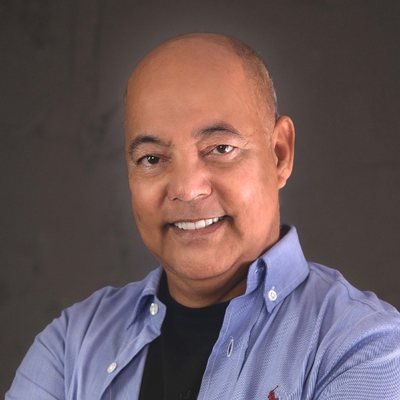
Mr. Dantas is an English mentor, coach and behavioral strategist from Maringá, Brazil, with more than 40 years of experience across the Army, banking, education and coaching. He created the Guided Voice Method to help adults speak English with confidence under pressure.