Starting is easy. Almost everyone knows the feeling of the first week: new plan, new notebook, new energy. The real test comes in week three, when the excitement is gone, results are still invisible and the old routine starts calling you back.
That is the moment this guide is about. Not how to feel motivated, but how to keep going when you don’t. You will learn why motivation fades, how to turn vague goals into measurable ones, how to track progress in a simple way, what to do on a plateau and how small wins keep you moving.
Why Motivation Fades (and Why That’s Normal)
Motivation is an emotion, and emotions change. It rises when something is new and exciting, and it drops when the novelty wears off and effort becomes routine. That drop is not a sign that you chose the wrong goal or that you lack discipline. It is how human beings work.
The people who keep going don’t have more motivation. They have a system that doesn’t depend on it. They know what to do each day, they can see their progress, and they have a plan for the hard weeks before those weeks arrive.
Motivation starts the journey. Structure carries you through it.
Consistency Beats Intensity
Most people try to compensate for low consistency with bursts of intensity: three hours on Saturday after doing nothing all week. It feels productive, but the brain doesn’t build lasting change that way. Small, regular actions build momentum, strengthen memory and reduce the risk of burnout. Big, irregular efforts exhaust you and make the next start harder.
Thirty focused minutes every day will beat four hours once a week almost every time. And on very busy days, five or ten minutes is enough to keep the chain unbroken. That is why every goal needs a daily minimum: the smallest version you can do even on your worst day. If you need help starting when resistance is high, use the 2-Minute Rule.
Turn Vague Goals into Measurable Ones
“I want to get in shape.” “I want to be more organized.” “I want to grow my business.” These are wishes, not goals. Your brain can’t track a wish, so it can’t tell you whether you are making progress.
Make each goal clear enough to measure:
- Specific: What exactly will change? “Walk 30 minutes” instead of “exercise more.”
- Measurable: How will you know? Minutes, pages, calls, kilos, savings.
- Achievable: Challenging, but realistic for your current life.
- Relevant: Connected to something that truly matters to you.
- Time-bound: By when? “Five days a week for the next 90 days.”
Then break the big goal into smaller pieces. A 90-day goal becomes a monthly target, a weekly target and a daily action. The daily action is the only one you need to think about today. For a complete structure built around this idea, see my 90-Day Personal Reset.
What Gets Measured Gets Managed
Years ago, I was called to diagnose a gas station that was deep in debt, even though it sold a lot of fuel every month. On paper, the business should have been doing well. I spent two days observing closely and reviewing the records. The problem appeared quickly: there were no real controls. A night employee was selling on the side, cash was being diverted from the office, and the attendants had no system for receipts. The money was coming in and leaking out at the same time. My recommendation was direct: dismiss the people involved and put basic controls in place, starting that same week.
Personal change works the same way. Many people work hard but never measure anything, so effort leaks out without them noticing: unplanned evenings, skipped days, habits that quietly come back. What you don’t track, you can’t protect.
Research supports this. A meta-analysis of 138 studies with nearly 20,000 participants, reported by the American Psychological Association, found that people who monitored their progress were more likely to reach their goals. The effect was even stronger when they physically recorded their progress or shared it with others.
How to Track Progress Without Becoming Obsessed
Tracking should help you, not become a second job. Keep it simple:
- Choose one to three numbers. For example: days you did your daily minimum, minutes of practice, and one result that matters (weight, savings, pages written).
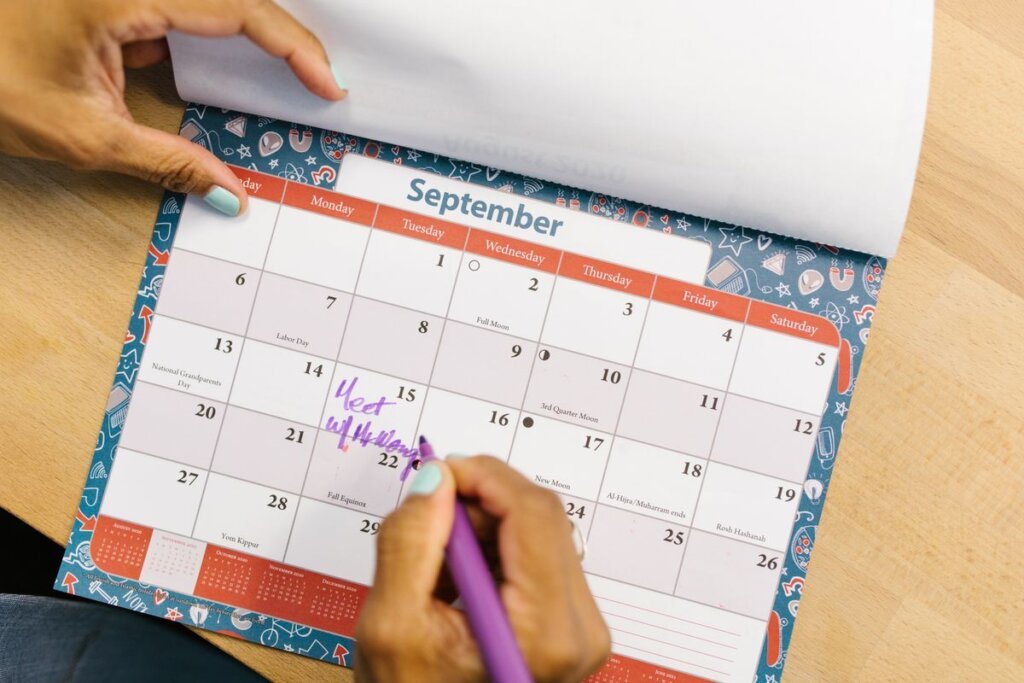
- Record them physically. A paper calendar, a notebook or a simple spreadsheet. Mark the day as soon as you finish.
- Review once a week. Every Sunday, look at the numbers and write three lines: what worked, what didn’t, what I adjust next week.
- Share with one person. Tell someone you trust what you are working on and send them a short update each week.
Don’t measure everything. Measure what tells you whether you are moving in the right direction.
Practice, Don’t Just Consume
One of the most common traps in personal growth is confusing consumption with progress. Reading another book, watching another video or listening to another podcast feels productive. Sometimes it is. But knowledge only becomes change when you apply it.
A good rule: for every hour you spend learning, spend at least as much time practicing. If you read about better conversations, have one this week. If you watch a video about planning, plan tomorrow tonight. To understand why practice and recall work better than rereading, read The Science of Personal Growth.

Plateaus: When Nothing Seems to Change
Sooner or later, every serious effort hits a plateau: you keep doing the work, and the results seem to stop. Plateaus are especially common after the first few weeks, when the easy gains are behind you.
As a boy, I worked on a farm from about age 10 to 17, and my parents usually chose me to plant the fruits and vegetables. On a farm, you learn early that what you plant doesn’t show up the next morning. For a while, nothing seems to happen above the ground. But you don’t dig the seed up to check whether it’s growing. You keep watering.
When you reach a plateau:
- Look back, not only forward. Compare today with your first week, not with your final goal. You will usually see more progress than you feel.
- Vary the method, not the goal. Change the time, the place, the format or the partner. Keep the commitment.
- Revisit the goal. Is it still meaningful? Is it still realistic? Adjust if needed.
- Take a short, planned pause. One or two days of rest, decided in advance, is recovery. Disappearing for a month is quitting.
Small Wins Keep You Going
Visible progress is one of the strongest fuels for continuing. That is why the first steps of any change should produce a quick, concrete win.
A physical therapist once came to me with an empty schedule and financial problems. I didn’t give her a complex marketing plan. I gave her three simple tasks: get back in touch with former patients, identify the five most influential among them, and personally deliver a small symbolic gift to each one, asking for referrals. Two weeks later, her schedule was full.
Three tasks. Two weeks. A visible result that gave her the confidence to keep going. Small wins are not small when they prove to you that change is possible.
Celebrate yours on purpose. Write them down: the first full week, the first hard day you didn’t skip, the first time someone noticed the difference.
Find Accountability
Consistency is much easier when you are not alone. A partner, a group or a mentor gives you encouragement, feedback and a simple reason to show up: someone is going to ask.
You don’t need a big structure. One weekly message to someone you trust (“This week I did my minimum five out of seven days”) is enough to make your commitment real. For more on building habits that last, read Unstoppable Habits.
A 30-Day Consistency Tracker
| Week | Focus | What to do |
|---|---|---|
| 1 | Start small | Define your goal, your daily minimum and one to three numbers to track. Mark every day. |
| 2 | Protect the chain | Do the minimum every day, even on bad days. Send your first weekly update to someone. |
| 3 | Expect the dip | When motivation drops, keep the minimum and change one detail of the method. Write one win. |
| 4 | Review and adjust | Compare week 4 with week 1. Keep what worked, drop what didn’t and plan the next 30 days. |
Common Mistakes That Break Consistency
- Depending on motivation. It will leave. Your system has to stay.
- Setting goals you can’t measure. If you can’t see progress, you will assume there is none.
- Tracking too much. Ten numbers become a burden. One to three are enough.
- Treating a bad day as a failure. Missing once is normal. Never miss twice.
- Quitting on a plateau. That is often exactly when the change is taking root.
Your Next Step
You don’t need more motivation. You need a smaller first step, a simple way to see your progress and a plan for the weeks when it gets hard.
Today, write one measurable goal, define your daily minimum and choose the numbers you will track. Then mark today on your calendar. Tomorrow, do it again. That is how consistency is built: one marked day at a time.

Mr. Dantas is a coach, mentor and behavioral strategist from Maringá, Brazil, with more than 40 years of experience across the Army, banking, education and coaching. Trained in NLP, he helps adults overcome emotional blocks, build lasting habits and communicate with confidence under pressure.